GFW Blocks Article on GFW?
I'm having some difficulty pulling up this particular article on Wired without a proxy, while the rest of Wired loads fine. Anybody else have a problem?
China Monumentis : Qva Sacris quà Profanis, Nec non variis Naturæ & Artis Spectaculis, Aliarumque rerum memorabilium Argumentis Illustrata
Men who congregate with men tend to be more sensitive about status and reputation. Even if they are not intoxicated with drink or enraged by insult, they instinctively test one another, probing for signs of weakness. . . . disreputable, lower-class males . . . exercised much greater influence in bachelor communities like bunkhouses and mining camps. They both tempted and punished, for to fail to emulate their vices was to fail, in their own terms, to be a man.While this certainly describes, say, a frat party, it seems awfully reductionist, as does the emphasis on testosterone. Men are reduced to hormone driven robots of sorts. Den Boer and Hudson do not address factors such as family, economics, political events, moral codes, social policies or organizations, or indeed anything else that might affect the behavior of these men. I can't help but be reminded of the dehumanizing labeling of child offenders as "superpredators" in the 1990s, or jokes about how a woman president would start a nuclear war during her time of the month.
It is important to note that we are not claiming that the presence of significant numbers of bare branches causes violence; violence can be found in all societies, regardless of sex ratio. Indeed, to give but one example, the sex ratio of Rwanda in 1994 was normal. Rather the opportunity for such violence to emerge and become relatively large-scale is heightened by socially prevalent selection for bare branches. We see this factor as having an amplifying or aggravating effect. To use a natural metaphor, the presence of dry, bare branches cannot cause are in and of itself, but when the sparks begin to fly, those bare branches provide kindling sufficient to turn the sparks into a fire larger and more dangerous than otherwise.While it is a lovely metaphor, this hardly seems a supportable claim. If they are simply stating that violence is "heightened" by the presence of bare branches, it begs the question: heightened compared to what? Remember that according to U.S. Census data, China has had about 15 million surplus males for at least the past 20 years. Shouldn't we be seeing an increase in violence that can be demonstrably linked, or at least correlated to the male surplus population right now? There are the reports of increased mass demonstrations that are heard so often, but these have been increasing while the male surplus population has held steady, and there are plenty of other reasons for these protests (many of which involved women and older people), such as growing inequality, the rise of the Internet and cell phones, etc. etc. Plus the statistic itself isn't at all reliable, as there are conflicting definitions of a "mass incident". Den Boer and Hudson point to reports of high crime rates among migrant workers in China, who they believe share a large overlap with bare branches. But during this time the number of bare branches has remained steady. Other factors such as discrimination, lack of a social safety net, poor economic opportunities and the like can easily explain this. Do we even need an argument that testosterone is involved, and can this even be demonstrated?
“Our analyses of interstate and intrastate episodes of collective aggression since the 1960s indicate the existence of a consistent correlation between the ratio of males 15 to 29 years of age per 100 males 30 years of age and older, and the level of coalitional aggression as measured by the number of reported conflict related deaths.”Mesquida and Weiner do indeed name a tipping point for major conflict, and allow for mitigating circumstances - unlike Den Boer and Hudson:
"Populations with ratios of young males exceeding 60 per I00 males 30+ are predicted to move toward a state of internal or external conflict, unless there exist particular mitigating circumstances such as an extremely rapid increase in resource availability or new possibilities to migrate to more productive environments."If one looks at U.S. Census data comparing the ratio of 15-34 year old males to 35+ year old males (weighing the ratio even more in Den Boer and Hudson's favor than Mesquida and Weiner's original age groupings) in China from 2000-2020, it is clearly steadily decreasing as China's population grays. In 1996, the ratio of younger men to older was 104:100, which by Mesquida and Weiner's scale ought to have provoked a major conflict. In 2005, the ratio was closer to 75:100. In 2020? 65:100. By Mesquida and Weiner's argument, the chances of China's sex ratio causing problems in the future are less, not more, than the past decade. Den Boer and Hudson's references to Robert Wright's The Moral Animal and Laura Betzig's study of the link between despotism and polygyny (men hoarding wives and mistresses), since they infer that these works argue that gender imbalances are only governable by authoritarian regimes, when both seem only to suggest that there is a correlation between imbalanced sex ratios and authoritarianism - not that only one can deal with a preponderous of men.
Over the past 20 years, the government has gradually allowed its own Muslim minority to rebuild institutions that were devastated by state-sponsored attacks on Islam during the Cultural Revolution. Islamic schools have opened, and scholars of Islam are being encouraged to go abroad to pursue their studies. Unlike Christians, China's estimated 20 million Muslims are considered an ethnic minority, a status that confers certain protections and privileges.OK... uh, China still confiscates passports to prevent Uyghurs from going on the Hajj, bans students, children and those employed by the government (which is alot of people in Xinjiang) from attending mosques, and all schools and imams are licensed and controlled by the state.
Poster from the Tuku ArchiveEven though most of the actors are Caucasian, with the exception of star Sessue Hayakawa, this tragic romantic drama tries to remain true to the spirit of the Orient (or at least what white folks assumed it was like). Loey Tsing, the first love of Chan Wang, is sold into slavery by her father. Although Chan marries another, he still loves Loey; only the birth of a son relieves his unhappiness. He adores little Chan Toy even though he finds nothing to like about his wife. Through his job running a lumber yard in San Francisco, Chan comes to the home of a wealthy Chinaman, Man Low Yek. It turns out that he is Loey Tsing's master. When Man Low Yek sees the two together, he angrily swears revenge and invites Chan's unfaithful wife up to the house. She brings Chan Toy, and the frightened little boy falls out a window. Chan finds him crumbled and dead and is overcome with grief. Through the use of his wiles, he causes the death of both Man Low Yek and his wife. Then he and Loey Tsing return home to China together.In The Production and Consumption of Chinese Theater in Nineteenth Century California, Daphne Lei argues that the original production involved the "first Chinese actor to appear on the English speaking stage in the U.S." According to scholar Lois Rather, Kim Poon, "a product of local schools", played the friend of the title character. Unfortunately, at the time it was not clear if Kim Poon was the name of the actor or the character he played, and he did "not have any significant lines, except for some ‘laughter and Chinese exclamations’ like “Hi la, hi la”. It is ironic that the first Chinese actor on the English-speaking stage was a non-speaking character."
The two scenic pictures, representing a street in Chinatown in the bustle of a noonday, and an alley at night with contiguous gambling houses and opium dens, are such as impress the spectator with a sense of reality... it, first of all, pictures the routine of life among the Mongolians of the Pacific coast, but it involves a simple, tragic story which is characteristic of the race, as we Westerners understand it... The music ... is performed by a band of thirty-two musicians (some of them armed with Chinese instruments)... The pantomime is expressive and interesting, and all so strange that the spectator shivers a bit, though the sight of the steeple of a nearby Christian church rising above the joss-house is reassuring... The chatter is all in Chinese. There is some sort of trouble about a boycott of one Man Low Yek, ordered by the highbinders... A party of "white devils" is "slumming" in Chinatown that night. The spectator feels that he is one of the party, and enjoys special privileges.The term "highbinder" is one with a murky origin. The American Heritage Dictionary lists its definition as a "corrupt politician" and a "A member of a Chinese-American secret society of paid assassins and blackmailers." It lists the etymology as "After the Highbinders, a group of ruffians in New York City c. 1806." By the late 19th century, it had become a term not only for Chinese gangsters, but for Chinese people in general:
Highbinder weapons circa 1900When the Chinese began to flock to California in large numbers, attracted by gold mining and the promise of work on the overland railroad, they formed for mutual protection what are known as the Six Companies. These were fashioned on the principle of trade guilds. The men from Canton, for instance, formed one company, those from Hong-Kong another. The members paid regular dues, for which the society furnished them hospital care when sick, and guaranteed that their bones should be carefully transported to China in case of death. They were also to be aided in any difficulty with Chinese of other companies or with whites. The company rooms were the head-quarters for the members, where they could get the latest news from China. Outgrowths of these companies, but independent of them, are the Highbinders’ societies... Though known as Freemasons, the Highbinders are really banded together for black-mail and police purposes. If by any factor the confidence of a Highbinder is won, he will have no hesitation in acknowledging that he lives by black-mail...
The mother society among the Highbinders is the Chee Kung Tong, which occupies a substantial three-story building on Spofford Alley, in the heart of the Chinese Quarter of San Francisco... The influence of the head society is far-reaching, and it is doubtful whether its leaders would heed any order from a lesser source than the Chinese Consul. It is even said that the Consul’s order has sometimes been overruled, as there are men in the Chee Kung Tong who acknowledge no allegiance to China... The Highbinder is almost entirely beyond the pale of American law. His secret hiding-places defy the ingenuity of the police; he holds an oath in court in contempt; he can get a score of witnesses in his society to swear to anything which he desires; he has been the chief cause of the difficulty in the enforcement of the Restriction Act in San Francisco.
This six billion yuan banknote was issued in 1949 by the nominally Guomindang government of Xinjiang. Inflation was pretty bad. A few people on the Chinese 'net seem to think this is the largest numerical banknote ever issued in the world, but I know their wrong because I own one of these from the last days of Yugoslavia:
After the Communists took over Xinjiang, alot of people weren't using cash. They were the scrip issued by the Bingtuan, the military veterans who were mobilized in Xinjiang to develop agriculture (and secure the borders).
THE CHANGES IN CHINA.From Asia Times Online, today, Multinationals Fear US-China Trade Wars:
October 13, 1907, Sunday
Predictions have been freely made of late that the approaching abdication of the Dowager Empress would be the signal for internal commotions in China amounting to a revolution, and possibly the breaking apart of the empire through the effort of the Chinese race to unseat the ruling Manchus. For this reason, it is inferred, and indeed proclaimed by the highest authority, the throne is bent on dissolving the distinctions, superficial and fundamental, between the two races, and resolved upon liberal reforms that will modernize China. The imperial decree of October 1 declared that preparations should be made to give China a constitution. Secretary Taft, in his speech at Shanghai, spoke in warning of "radical and sudden reforms", but he advocated a reform along lines of internal development, education, the enlargement of trade, and predicted that this would increase commerce and advance friendly relations with this country.
The gradual reform programme of the Dowager Empress and her advisors is China's hope in the impending crisis. A sudden cleavage from the past would bring into powerful antagonism the adherents of traditional power and the more zealous forces of reform. There is no question that civil war is feared by the reigning family...
The fleet of the United States will remain in Pacific waters during the months preceding the abdication of the Dowager Empress, which is set for the Chinese New Year. Whether our warships are sent merely on a "practice cruise" or in view of complications with Japan, or because of coming events in China, it is certain that they will be in a position of advantage should anything happen to conflict with the American policy of the "open door"...
Our Secretary of War refused to speculate upon the probable action of the United States in case the interests of American merchants were placed in jeopardy, but he did say:
"It is clear that our merchants are being roused to the importance of the Chinese export trade and they would view with deep concern any and all political obstacles to its maintenance and expansion. This feeling is likely to find expression in the action of the American government."
The US Congress is about to enact legislation that would levy punitive duties on Chinese goods. This could lead to unintended consequences for both American consumers and the wider US economy.Again, in October 1907:
Some 119 leading multinational companies agree - including Boeing, Citigroup, General Motors, and Microsoft. They have called on Congress to reject protectionist legislation against China, arguing that "imposing unfair barriers to trade in the name of currency valuation or product safety is not a solution to the underlying concerns". It was "a vote for free trade", reported the state-owned China Daily, which, as so many other Chinese observers do, argues that rising protectionism among some US lawmakers "seriously threatens the interests of China, the United States itself and the world at large".
A REFORMER IN CHINA.; Achievements of Yuan-Shih-Kai Attracting Wide Attention.Yuan Shikai, six years later*, would dissolve the national assembly, and in 1915, declare himself emperor. Today, Will Hutton wonders if one of Hu Jintao's successor will be China's Gorbachev.
October 29, 1907, Tuesday
WASHINGTON, Oct. 28. -- Another Li Hung-Chang has arisen in China and his achievements are attracting attention throughout the civilized world. He is Yuan-Shih-Kai, formerly Viceroy of Chih-li, now President of the Wei-Wu-Pu, or Board of Foreign Affairs at Peking. He assumed the reins of Government in Chih-li at a time when chaos and disorder prevailed in the province... During Mr. Yuan's term as governor, Mr. Ragsdale [American Consul-General] says he established the best of relations with foreigners, and by sturdy honest efforts won the goodwill of the natives as well. His advice, even then, was sought by Peking, and the best edicts were the result of his suggestions. Notable among these were the promises of efforts toward Constitutional government, and those relating to the suppression of the opium traffic.
In the Soviet Union, Mikhail Gorbachev's readiness to question communism was intertwined with his membership of the Soviet Union's fifth generation of leaders. He did not champion perestroika and glasnost alone; much of the nomenklatura had decided that the Soviet economic and social model was dysfunctional, corrupt and endemically inefficient and had to change.*In 1913, the New York Times also reported that Yuan Shikai's brother was growing opium illegally.Will one of Hu Jintao's two 'Lis', as the frontrunners to succeed him, Li Keqiang and Li Yuanchao, are popularly known, feel the same way as they walk out in front of the cameras in the Great Hall of the People on Friday? Will one prove to be China's Gorbachev?
In some ways, spiritual warfare resembles (to a non-believer like myself, anyway) a sort of Dungeons and Dragons approach to the world. Some believers even mime putting on "God's armor", in another biblical reference taken rather literally, before engaging the enemy. There's lots of swords and demons and, well, magic.Pondering the message of Eph.6:12 ("For we wrestle not against flesh and blood, but against principalities, against powers, against the rulers of the darkness of this world..."), they prayed to identify the source of Kiambu's spiritual oppression, Mr. Muthee says. Their answer: the spirit of witchcraft.
Their research into the community revealed that a woman called "Mama Jane" ran a "divination clinic" frequented by the town's most powerful people.
After months of prayer, Muthee held a crusade that "brought about 200 people to Christ." Their church in the basement of a grocery store was dubbed "The Prayer Cave," as members set up round-the-clock intercession. Mama Jane counterattacked, he says, but eventually "the demonic influence - the 'principality' over Kiambu - was broken," and she left town.
The atmosphere changed dramatically: Bars closed, the crime rate dropped, people began to move to the area, and the economy took an upturn. The church now has 5,000 members, he says, and 400 members meet to pray daily at 6 a.m.
Identify the national sin. This is no place for vagueness. We must be specific, not evasive. For example, the principal sin of my nation, the United States, is clearly racism and our corporate sins which have established the spiritual strongholds are clear. The broadest and most pervasive sin that our nation ever committed was bringing Africans to our shores as slaves human merchandise to be bought, sold and used for any conceivable purpose to satisfy the desires of their white masters. But beyond this, the deepest root of national iniquity, and also, as I see it, one of the primary causes of our subsequent lust for slaves, was the horrendous way we white Americans treated our hosts, the American Indians. What does the breaking of over 350 solemn treaties say about U.S. national integrity?The writer behind this new doctrine? John Dawson again. Wagner's example doesn't mention what this means for new converts in the "40/70 Window", which is the name for the area of the Eastern hemisphere between 40 degrees and 70 degrees north of the equator, or Europe and everything above, say, Pakistan and Iran, slicing nicely between Xinjiang and Tibet. Previously the campaign was the "10/40 Window", which focused more on India and Africa. Another example of identificational repentance is this one, when a Chinese convert confessed the corporate sin of the People's Republic of China invading India in 1962 to Punjabi attendees.
Brother Peter Xu initiated an act of identificational repentance on behalf of his homeland China. It was directed to the many Indian delegates that were in attendance. Historically, the 1962 China—India Border War, which began 43 years prior to the week of the Asian Summit (October 10–14), was a dark spot on the relations between these ancient civilizations. This public repentance was a deeply emotional time as delegates from Taiwan and Hong Kong joined in solidarity with these Chinese leaders to humbly cry out to our Heavenly Father for mercy and forgiveness on behalf of their motherland.The Christian Science Monitor also reported of the Windows and Joshua projects back in 1999, giving us some idea of the number of participants (allegedly):
The developer of the Joshua Project, Ralph Winter, was involved with both the Fuller School of World Missions and the AD2000 project, both of which were founded by C. Peter Wagner. Wagner himself is heavily involved with the Lausanne Movement, started by Billy Graham, and was doing many co-projects with Ted Haggard, of gay sex and Jesus Camp fame. And the language of SLSW is used elsewhere as well:Praying Through the Window began in October 1993, when some 21 million (according to AD 2000) prayed for the 62 nations in the window, and 188 prayer-journey teams took 257 journeys to pray on site, visiting each of those nations. During October 1995, some 36 million followed a prayer calendar targeting 100 "gateway cities" in the region, along with more prayer journeys. And in October 1997, prayers focused on the 1,739 unreached-people groups. The final effort is planned for October, targeting 3,000 "strategic towns."
To support this and "Joshua 2000" - the church-planting project - research and mapping organizations have created databases, people profiles, and maps to give intercessors tools to make prayers specific.
The AD2000 movement, Global Harvest and the Lausanne Movement all involve an interchangeable cast of characters. Global Harvest and C. Peter Wagner, however, emphasize the 40/70 Window and, curiously, Xinjiang. Under the auspices of the Strategic Prayer Network, which Haggard was involved in, Wagner went to Germany for "Target Germany" in 2001. At Target Germany, Wagner introduced Pastor Kim Sam Seeong (google cache of DOC file) outlining their Silk Road strategy:Q. I live in an area where drugs, alcoholism, immoral behavior and despair are a way of life. Since moving here, I've begun drinking and lying to the woman I love. My business and personal life have declined. Do you believe there are areas under demonic strongholds? What can we do? Should we move away?
Pat Robertson: You ought to move as fast as you can. Yes, there are demonic strongholds, without question. There is no doubt about it. There are certain areas where demon princes hold sway. And this thing has obviously got hold of you. Get away from there as fast as you can. Confess and recommit to the Lord. Absolutely. But get away from there. Flee.
"He is one of the two major apostles of the 40/70 Window. Roger Mitchell is the apostle of Target Europe. Kim Sam Seong is the apostle of Target Silk Road."Kim then said:
Obstacles of the gospel in the Silk Road are about worship. Do we have true worship or false worship? Through history in every territory over this Silk Road area, every kind of idol worship, curse, and power came in and spread out. From the West came humanism to this territory, Hellenistic Humanism. From the East the Babylonian worship system and also the Indian worship system with all kinds of things mixed in. It is very difficult to identify what is stronger and what is weaker. Nowadays, we can identify the strongest one, two, or three. The first is the spirit of Moon Goddess or Islam. Because the Silk Road area is Turkic, most of them speak Turkish. They understand each other. Some of them speak the Tajik language but for the most part they speak Turkish. This is a time to raise up the Turkic people. Turkic is the key Hindi people [sp]. From the Silk Road we can evangelize all of the world. If we can identify the spirits in the Turkic people, we can destroy Satan's wells... The Chinese government has a ten year project to develop northwest China, the Xinjiang Province which belongs to the Turkic language group. It is the only Muslim area in China. God is preparing the way to go out through the Silk Road area. The border will be open very wide through the economy. They are going out right now.So let's get this straight: the adherents of Strategic Level Spiritual Warfare see a strategic, uh, harmony, with the PRC's Western Development Strategy.
Wagner: The greatest challenge facing the global mission movement in the coming decade is to evangelize the 40/70 Window, the only major region of the world, with the exception of the Arab Muslim bloc, where the movement of God is virtually at a standstill. The two major segments of the 40/70 Window are post-Christian Europe and the Silk Road/Turkic Belt. As examples, there are proportionately fewer born-again Christians in Poland than in Nepal. There are proportionately fewer born-again Christians in Spain than in Japan. And I believe that the significant breakthrough that we have been praying for in the entire Muslim world, including the Middle East, will begin among non-Arab Muslims from Turkey to the Xinjiang Province of China.Probably my favorite example of spiritual warfare in Xinjiang is from this 1993 newsletter from Revival Chinese Ministries International, a Pentecostal outfit in Hong Kong. A gospel reading team in Xinjiang kept getting beaten up, perhaps because they were doing this:
According to the leader of this dare-to-die gospel team, team members had been conducting prayers of spiritual warfare outside the mosques for some years now. Of late, the team has sensed a change in the spiritual atmosphere there.The Lausanne Movement has a long, long article on the intricacies of spiritual warfare that I can't be bothered to read by Paul Hiebert, another advocate of these theories. More interesting is the Lausanne Movement's Chinese case study which is supposedly by one "Luke Shao", who spent ten years studying Qi Gong, only to realize after he became Christian that he had been in contact with a demonic power:
From Luke's ten year experience in qigong, he divided the practice of qigong into three stages. The first stage is physical exercise through a method of breaking so as to move the "air" (qi) into the interior parts of the body for health reasons. The second state is when one desires to have supernatural power, such as the ability to heal illness or extr-sensory perception. That supernatural ability, according to Luke, comes from demonic spirits. The third stage is when one becomes so bound to various demonic spirits that he become totally enslaved by these spirits. During this last stage, one can even experience one's spirit leaving one's body to hover around.Remember, these are not the doctrines of some whacked out fringe. These are movements connected to most of the major leaders of the Evangelical communities, and they preach what more or less seems to amount to a form of religious imperialism. While they deserve the right to practice their beliefs openly, I find nothing innocent or sweet about them. At least the Jesuits brought their science gear.
More recent reports tell us that the PSB appears to have extended this block to all incoming URLs that begin with "feeds," "rss," and "blog," thus rendering the RSS feeds from many sites--including ones that aren't blocked in China, such as Ars Technica--useless.Woah, hold on there kids! So far the only RSS block I know is Feedburner - which has been blocked before. Meanwhile online aggregators like Bloglines and Google Reader remain unaffected. Hell, my aggregator is still passing along feeds to me that are from Feedburner! Anyway, Ya I Yee has pointed out that Chinese RSS giant Feedsky is an alternative. Which got me wondering:

Mr. Zeng reached the formal retirement age of 68 this year, and party officials say he has stated repeatedly that he intends to step down.Willy Lam says:
Considering that the age of 68 was set as the retirement age for Politburo members at both the 15th and the 16th Party CongressesThe Hoover Institute's Lyman Miller says:
Most of these leaders will still be well short of 70, the age at which by apparent internal party norm leaders are expected to retire at the next party congress.Covering the last Party Congress, the BBC says:
Politburo's informal retirement age of 70OK, I give up. Is it formal? Informal? 68? 70? Was it set during the 14th, 15th or 16th Party Congress? And if we can't get this basic rule clear, what's the point of placing bets on who's in and out based on age?
A political leader who has stayed in one position for ten years can no longer stay in the same position. Thus, three provincial Party Secretaries will have to leave their current posts. Wang Lequan, Party Secretary of Xinjiang and a member of the Politburo, has been in his position for more than a decade. Wang is usually considered a member of the Chinese Communist Youth League (CCYL) Group because he once worked as Deputy Secretary of the Shandong Provincial Communist Youth League Committee between March 1982 and September 1986. He became Acting Party Secretary of Xinjiang in September 1994 and Party Secretary of Xinjiang in December 1995. He reached his ten-year limit in December 2005.So it seems Wang is heading out the door. But wait! Wang Lequan is a Youth League man, and so Hu's homeboy. Plus, he's a lively 63. Aggh! I know this is a pointless game, but it's so addictive!
... Nie Weiguo, an alternate member of the 16th Central Committee of the CCP and Deputy Secretary of Xinjiang, is a good candidate for the post of Xinjiang's Party Secretary. A native of Chongqing, Nie turned 54 in 2006 He has spent most of his working life in Sichuan, starting as an educated youth (zhishi qingnian) in Nanchuan, Sichuan in January 1969. He worked in the Peilin Prefecture (later Peilin Municipality and then Peilin District) for 17 years (1983–2000) and served as Deputy Secretary of Chongqing for three years (2002–5). He was transferred to Xinjiang in March 2005 as Political Commissar of the Xinjiang Construction Corps, Board Chairman of China New Construction Corporation and Deputy Secretary of Xinjiang. Notably, his predecessor, Chen Demin, was only a standing member of the Xinjiang Uygur Autonomous Regional Party Committee, but Nie was made a Deputy Secretary of Xinjiang. It is also possible that the Party Centre will transfer another individual from elsewhere to replace Wang Lequan. But whoever is the new Party Secretary of Xinjiang is unlikely to obtain a seat in the 17th Politburo. Wang Lequan's career path is probably unique to him.
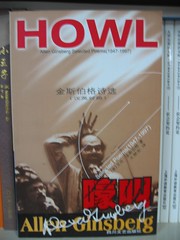
Yet Ginsberg, who died in 1997, was heard online and not on the New York radio station WBAI-FM, affiliated with the Pacifica network, because the station, according to an article on Wednesday, feared that by broadcasting “Howl” it could run afoul of the Federal Communications Commission’s interpretation of indecency and incur bankrupting fines.Listen to the Pacifica broadcast "Howl Against Censorship" online, where, for now, the FCC can't touch it.
Janet Coleman, WBAI’s arts director, said that when the idea of airing the poem to test the law was proposed, “I said, ‘Yes, let’s try it.’” The radio station has a history of championing the First Amendment, having broadcast the comedian George Carlin’s “seven dirty words” routine that resulted in a 1978 Supreme Court ruling on indecency. But after several harsh F.C.C. rulings in 2004 — against CBS for a glimpse of Janet Jackson’s breast during the Super Bowl halftime show and against Fox for curse words used during the Billboard Music Awards — “our lawyer felt it was too risky,” Ms. Coleman said. The commission can impose “draconian fines,” she said, that could put WBAI out of business.
I can't understand how i've gone astray,
I should be sailing away on a liner.
I was knocked on my back on a dock at yang-tse,
It's a hell of a way to see china.
But i'm ready.
You must be crazy...
And you got no money...
And you're a liar...
My straits are dire from the wok into the fire,
I'd like to trust you but i've broken my rickshaw.
Sometimes there's no hope in, in chasing opium,
I'd like to love you but i'm not sure what's in your eyes,
Mm, shanghai surprise.
Whatever you're saying, i want it anyway in
Been hanging 'round like a kid at your back door.
Oh, babe!
You could be kinder, and show me asia minor,
I'll let you love me, let you see what's here in my eyes,
Shanghai surprise.
You must be crazy... crazy...
And you got no money... money...
And it seems like madness...
Back streets so crowded that no room to swing a cat,
I'd like to know you but you're acting so coolie.
I'm finding out pursued by evil looking dudes,
It's getting hot for me like tofu when it deep fries,
Oh, shanghai surprise.
But, baby, you look like any common crook
That's hanging 'round in those real shady places.
Oh, baby!
While you assess me, why not try to impress me?
Step over here, let me see what's there in your eyes,
Oh, shanghai surprise.
I don't understand how i got delayed,
I should be sailing today on a liner.
Was kicked in the ass on a dock at yang-tse,
It's no way for a man to see china.
But i'm ready.
You must be crazy... crazy...
And you got no money... money...
But you're a tryer...
My straits are dire from the wok into the fire,
I'd like to meet you but i've broken my chopstick.
Sometimes there's no hope in, in chasing promises,
I wanna love you though it could prove to be unwise,
Shanghai surprise.
Whatever you're saying, i want it anyway in
In hanging 'round for a ride on your rickshaw.
Oh, babe!
You may correct me, now that you've inspected me,
Come over here, let me feel you cut down to size,
Oh, shanghai surprise.
My straits are dire from the wok into the fire,
I'd like to know you but i'm not really social.
Sometimes it's no joke, can't cope with opium,
I'd like to love you but i'm not sure what's in your eyes,
Shanghai surprise.
Shanghai surprise.
Shanghai surprise.
And you got no money...
But you're a tryer...
I think it was a few years ago there was this thing that came out called "The Lost Interviews with Bruce Lee." It's this black and white Canadian kind of Charlie Rose type show and they were interviewing him, and it was a great interview. The thing that really blew me away was if you watch that interview and you didn't know when that interview took place, everything that he was saying could apply to today's Asian-American actors and today's filmmakers, so I thought if somehow we could pull it off and make it '70s, it gave it more context. That was kind of the inspiration.Somebody go buy Jackie some tickets.
"When we finished filming, I felt very disappointed because it was a movie I didn't appreciate and I did not like the action scenes involved. I felt the style of action was too Americanized and I didn't understand the American humor," Chan said in a blog entry on his Web site seen Sunday.The reason the blog entry was "seen" on Sunday is because Jackiechan.com apparently just added a slew of older "JC Messages". In the entry, Jackie goes on:
But to my surprise, this movie was exceptionally successful in the box office and results were very pleasing. Because this movie was so popular, I was offered an irresistible amount of money to film the sequel and I could not say no.Um, does Jackie Chan have financial problems I don't know about? Cuz I think he could say no. Also, Jackie made $15 million against 15% of gross on Rush Hour 3, as well as gaining China/HK distribution rights. Yknow, I think by the third movie he could've been asking for executive producer rights as well and more creative control - not to mention asking someone to explain the jokes to him. There were 9 years between Rush Hour 1 and 3 to figure that one out.
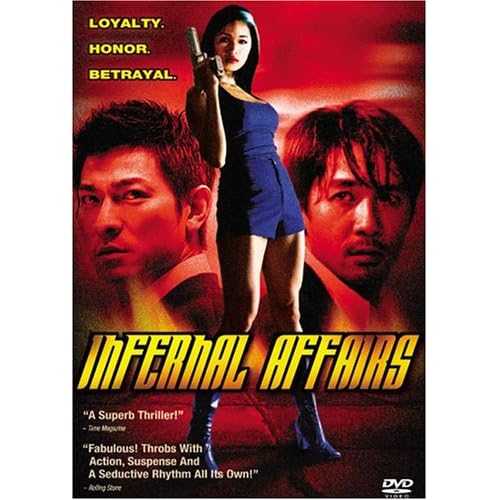
To me, it was about making another sequel for the audience around the world because in each country I travel to, someone would always ask me, “When will you film another Rush Hour?” But when I‘m in Asia, a lot of people would ask me, “When will you film another Drunken Master?” Or “When will you film another Police Story?” No one asks me about filming another Rush Hour. From what I have observed, I now understand the difference in movie tastes between the American/European audience and the Asian audience.The reason, Jackie, that nobody in America asks about when you're gonna make another Drunken Master or Police Story is because they've never seen them. Why is that? It's not because of cultural differences - it's because the American companies buying distribution rights to Asian films bury them or release them with as little marketing as possible ("Hero", "Shaolin Soccer", "Spirited Away"), rename them ("Drunken Master II" is called "The Legend of Drunken Master" in the USA, "Police Story 5" is "Supercop 2"), re-edit them (Such as "Tom Yum Goong", aka The Protector, aka "Honour of the Dragon", aka "Warrior King", for which the Miramax US DVD release murdered the main character's father who originally lived) and release them with the shittiest DVD covers of all time:
That chick on the cover? Not in the goddamn movie. And of course there's all that goddamn dubbing. It's not cute anymore. Stop it. There are online petitions against Disney and their ilk for all this butchery, but y'know who might really be able to stop these villains from killing Asian film in the US and Europe? Jackie Chan. Unfortunately, he's too busy swimming in his pools of cash and complaining about cultural barriers.I also admire the local government and the regional police force for their full support towards the film industry. They make the whole of Hollywood aware of the industry.Yes, because no one in Hollywood would be aware of the Hollywood industry if it weren't for the valiant efforts of the local government and regional police force. The mind reels.